A Brief History of the Moving Industry in the U.S.
The modern American moving industry looks, on the surface, like a commodity service — book a truck, pack a house, sign a bill of lading, pay. Underneath that simple transaction sits a century of accumulated regulation, collapse, reconstruction, and consumer-protection reform. Every piece of the system a consumer interacts with today — the USDOT number on the side of the truck, the bill of lading's specific legal language, the 9-kilo-per-carton weight rules, the arbitration program — is a fossil layer from a specific historical moment.
Understanding that arc matters for two reasons. First, because the protections that exist today exist because something went wrong earlier: every federal rule on a moving company's back office was drafted in response to a specific documented failure. Second, because the industry's structural vulnerabilities — the ease of re-registering under a new identity, the broker/carrier distinction, the way lead-generation sites route consumers — are features of the history, not bugs. A consumer who understands how the system was built has a much easier time reading the signals that still matter.
This article traces the moving industry from pre-railroad drayage through the Motor Carrier Act of 1935, the postwar suburban boom, the 1980 deregulation, and the founding of FMCSA in 2000. It is not a corporate history of the van lines — it is a history of the regulatory and economic architecture that any mover operating today is built on top of.
TL;DR
- Before 1891, moving was a local, unspecialized service — horse-drawn drayage, river barges, and teamsters. There was no such thing as a "household-goods specialist."
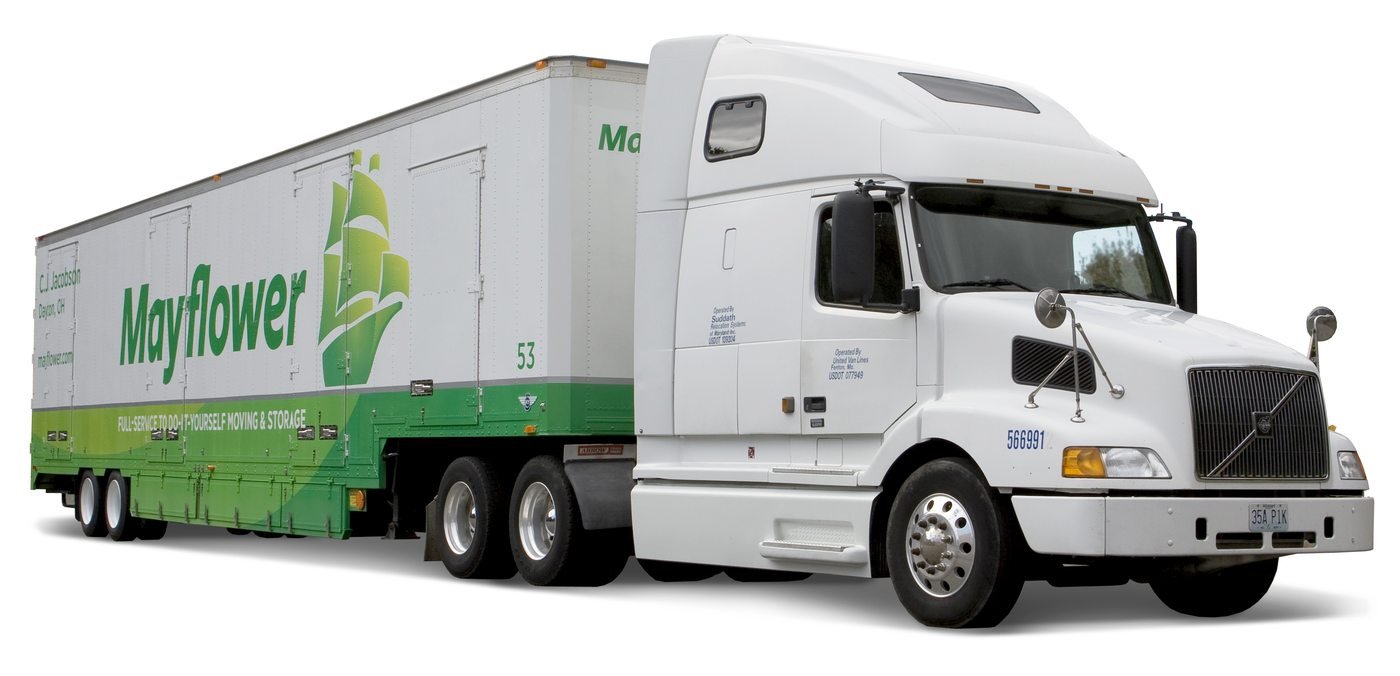
- Bekins (1891) was the first company to specialize in household-goods moving. The cooperative van-line model — agent networks sharing backhauls — emerged with Mayflower (1927), Allied (1928), and United (1928).
- The Motor Carrier Act of 1935 put interstate movers under the Interstate Commerce Commission. For 45 years, the ICC controlled who could operate, what they could charge, and where they could go.
- The Motor Carrier Act of 1980 deregulated entry and pricing. Licensed carriers doubled by 1990. Rates fell. So did the capital barrier to entering the industry — which shaped the consumer-protection problems that followed.
- FMCSA (January 1, 2000) built the federal oversight layer a modern consumer actually uses: SAFER snapshots, the National Consumer Complaint Database, Protect Your Move.
- Today's vulnerabilities — brokers who don't own trucks, chameleon carriers, fake review sites — are the direct descendants of 1980's entry deregulation meeting the 1990s internet.
Before the railroads: drayage, canals, and local haulers (pre-1860s)
Through most of the 19th century, "moving" was not a recognized trade. Long- distance household relocations were rare; most Americans who moved at all moved within walking distance, and the labor of loading a cart was done by the family, sometimes with a hired neighbor. For anything larger, the available options were drayage (short-haul horse-drawn freight on a flat wagon, typically within a city), canal barges on systems like the Erie Canal (opened 1825), and riverboat freight on the Mississippi and Ohio systems.
The Erie Canal is worth singling out. It dropped the real cost of inland freight by roughly 90 percent between New York City and the Great Lakes, and in doing so it turned New York into the dominant US port and made long- distance freight thinkable as a commercial category. But it did not create a "moving industry" in any recognizable sense. Canal boats moved grain, timber, and coal. Families moving their household from Albany to Buffalo still packed it themselves, loaded it onto a hired barge, and unloaded it themselves on the other end.
The same was true of the early rail era. Railroad freight transformed what the country could ship, but the last mile on either end — the home, the warehouse, the storefront — was still handled by local teamsters with horse-drawn wagons. The "moving company" as a specialized service provider simply did not exist yet.
The railroads reshape long-distance freight (1860s–1890s)
The First Transcontinental Railroad was completed at Promontory Summit, Utah, on May 10, 1869, connecting the eastern rail network to California. Over the next three decades, the US rail system grew to roughly 200,000 miles of track — an infrastructure buildout that rewrote every assumption about distance, speed, and the economic geography of the United States.
For the moving industry, the effect was paradoxical. Rail made long-distance relocation possible for the first time, but the last-mile problem got worse, not better. A family shipping household goods from Chicago to Omaha could put a crate on a train — but they still needed someone with a horse and wagon to haul the crate to the depot, and someone else to haul it from the depot to the new house. That last-mile demand is what created the first commercial opening for a dedicated moving operator.
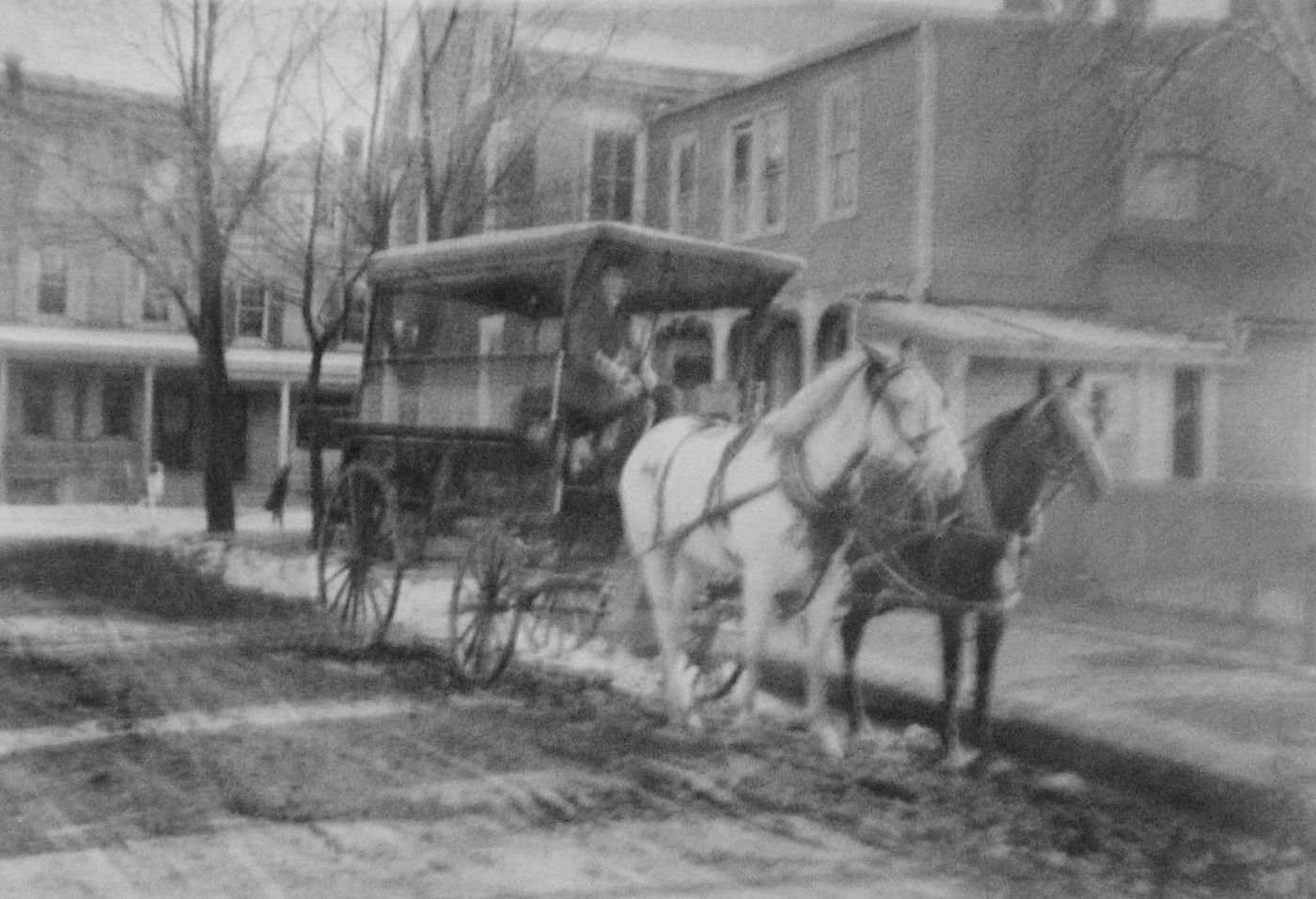
By the 1880s, most major American cities had recognizable express companies and drayage operators with named fleets, painted wagons, and standing contracts with railroads. The surviving photographic record — much of it preserved by the Library of Congress Prints & Photographs Division — shows a trade that was already professionalized in appearance: uniformed drivers, company-branded wagons, and purpose-built freight bodies. What the industry did not yet have was a specialist in household goods, as distinct from general freight.
Bekins and the birth of the household-goods specialist (1891)
In 1891, in Sioux City, Iowa, two Dutch-American brothers named John and Martin Bekins opened a business with three horse- drawn vans and twelve employees. What made Bekins Van Lines different from every drayage operation that preceded it was a single strategic decision: the brothers chose to specialize in household goods — furniture, pianos, trunks — rather than general commercial freight. According to the company's historical record, Bekins was the first moving company to specialize in household goods, the first to introduce a covered moving van (1903), and the first to complete a transcontinental motor van move (1928).
Specialization mattered because household goods are not like general freight. A piano is not a crate of nails. A family's furniture does not survive being treated as fungible cargo. The consumer does not know the commercial tariff system and cannot negotiate like a shipper. The whole downstream architecture of the industry — padding, crating standards, weight- based pricing by the hundredweight, the declared-value system — derives from the recognition, starting with Bekins, that household goods need their own handling doctrine.
Over the following decade, Bekins followed the westward migration and opened offices in Omaha, Los Angeles, and Chicago. By the 1910s, other household-goods specialists were following the same pattern in other cities. The industry's geographic fragmentation — local operator per city, loose coordination across regions — was set in that first decade and has never fully gone away.
The motor age and the cooperative van line (1900s–1930s)
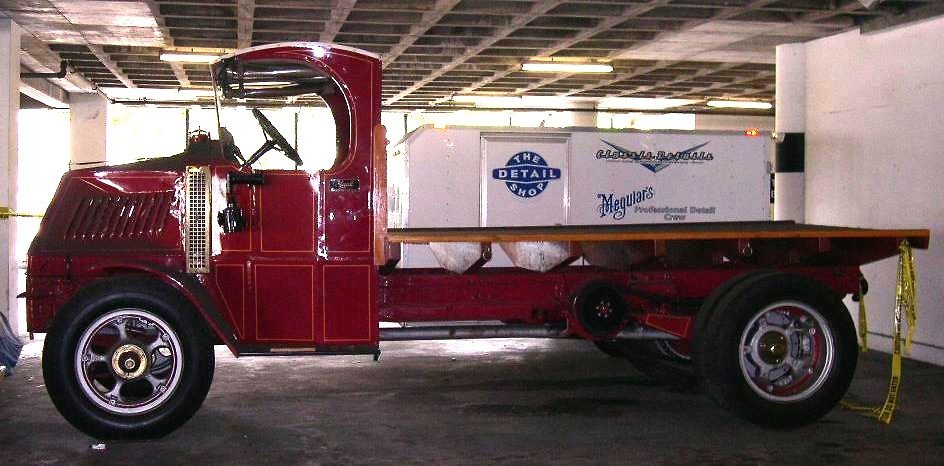
The motor truck changed the industry twice. First, gradually, as Ford's Model TT (1917) and heavier chassis like the Mack AC ("Bulldog," introduced 1916) replaced horse teams inside city limits. Second, abruptly, as interstate paved-road networks in the 1920s made long-haul truck freight competitive with rail for medium-distance shipments. By 1928, Bekins had completed the first transcontinental move entirely by motor van — a milestone that would have been physically impossible a decade earlier.
But the real structural innovation of the 1920s was not the truck. It was the cooperative van line. The problem a cooperative solved was economic: a truck that delivered a load from New York to Chicago had no cargo on the return trip, and the dead-headed miles back were a pure loss. In 1928, a group of eastern moving agents formed Allied Van Lines as a non-profit cooperative precisely to coordinate return loads across its agent network. The same year, a Cleveland entity called Return Loads Service, Inc. was founded with identical logic — it later reconstituted as United Van Lines. A year earlier, in 1927, Mayflower Transit had been founded in Indianapolis by Conrad M. Gentry and Don F. Kenworthy.
The last of the "legacy five" was North American Van Lines, established in 1933 by a group of twelve agents and later headquartered in Fort Wayne, Indiana after a 1947 move from Cleveland. By 1938, NAVL's network had expanded to 120 agents. The template was the same across all five: a small central organization owning the brand and the dispatching system, with hundreds of independent local agents doing the actual packing, driving, and customer-facing work.
That agent-network structure is still the defining shape of American long-distance moving. When a consumer in 2026 books an interstate move through a major van line, the truck that shows up is almost never owned by the brand on its side. It is owned by a local agent who paid into the cooperative for the right to use the trademark and the dispatching system. Ninety-plus years on, the cooperative architecture invented in the late 1920s is the default industrial form.
Regulation arrives: the Motor Carrier Act of 1935
By the early 1930s, the rise of truck freight had thrown the railroads into crisis. Rail had been regulated since the Interstate Commerce Act of 1887 — they could not cut rates below federally set minimums, could not exit unprofitable routes, and had to seek ICC approval for almost every commercial decision. Trucks were unregulated. They undercut rail on rates, picked the most profitable lanes, and ran out of the cities that had once been rail-exclusive markets.
The Motor Carrier Act of 1935 was the railroads' answer. Passed after sustained lobbying by the railroad industry, the Interstate Commerce Commission itself, and state regulators, the Act gave the ICC authority to regulate interstate truck and bus carriers for the first time. A 1935 Cornell Law Review analysis captured the core mechanism: every new motor carrier had to obtain a certificate of public convenience and necessity from the ICC. The ICC decided who could enter, what routes they could run, and what rates they could charge.
The Act split motor carriers into two categories: common carriers, who offered service to the general public, and contract carriers, who hauled for a limited roster of customers under specific agreements. Household-goods movers fell under the common-carrier regime. The specific bureaucratic vocabulary that still governs interstate moving today — the authority to operate, the tariff to charge, the bill of lading as a regulated document — comes directly from this 1935 legal architecture.
For forty-five years, from 1935 to 1980, the ICC framework made the moving industry stable but calcified. Existing operators were protected from new competition by the certificate requirement. Rates were set through industry rate bureaus and effectively ratified by the agency. Entry was hard; exit was hard; innovation was slow; prices were high. It was a system designed to stabilize the 1930s industry, and it did — at the cost of freezing the market structure in place for two generations.
The postwar boom: GI Bill, suburbs, and the corporate move (1945–1970)
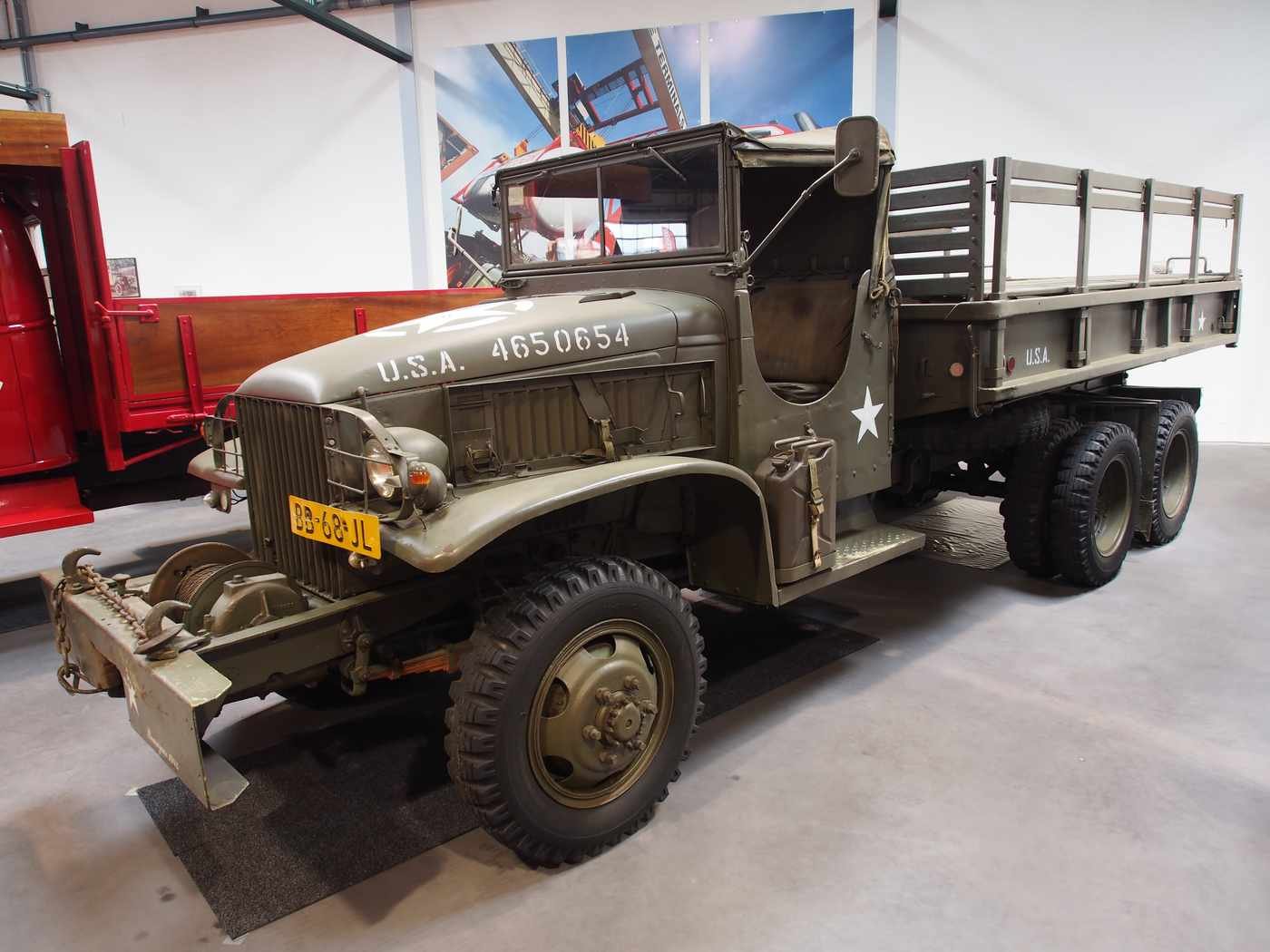
The period between 1945 and 1970 is when the moving industry became a mass-consumer industry. Three forces drove it:
The GI Bill and mass family formation
The 1944 Servicemen's Readjustment Act — the GI Bill — underwrote mortgages for millions of returning veterans. Between 1946 and 1964, US births averaged more than four million a year. Those new households needed housing, and the housing did not exist where the jobs were. The result was the largest voluntary internal migration in American history.
Mass suburbanization
In 1947, the Levitt family broke ground on Levittown, New York, and completed more than 17,000 houses by 1951 using factory-style production methods. Over the next two decades, similar mass-produced suburbs ringed every major American city. The intra-metropolitan move — from a city apartment to a tract home thirty miles out — became the single most common moving scenario in the country.
The Interstate Highway System
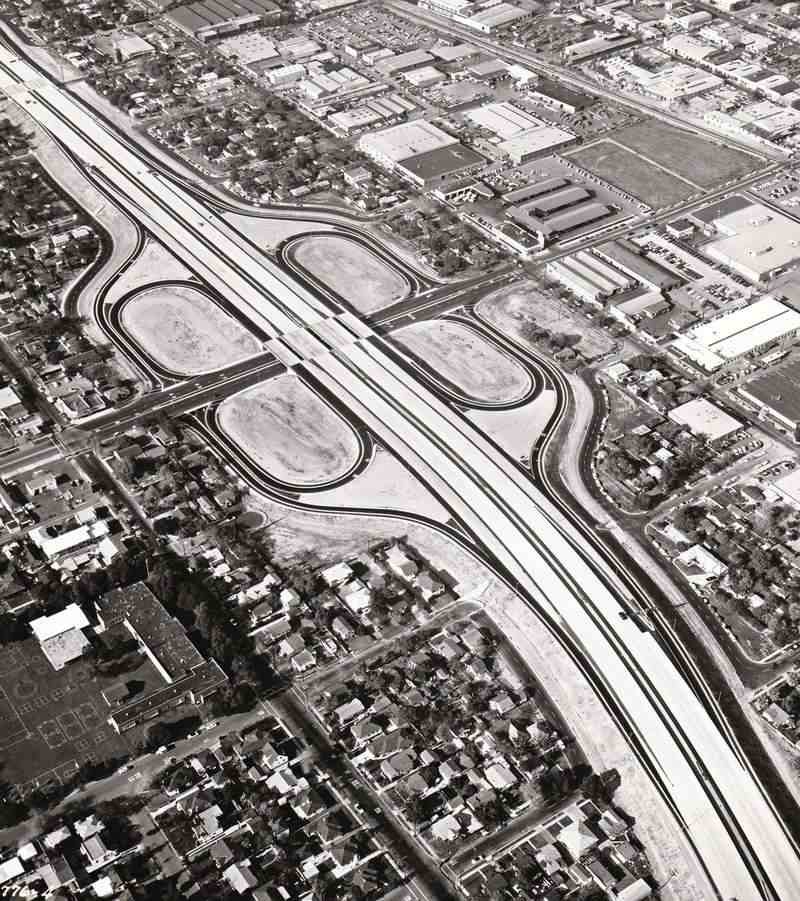
On June 29, 1956, President Eisenhower signed the Federal-Aid Highway Act, authorizing $25 billion for the Interstate Highway System — 41,000 miles of limited-access freeway. The Eisenhower Presidential Library keeps the full archival record of the project's political origins; the Federal Highway Administration history office documents the construction story. By the early 1990s, nearly 45,000 interstate miles were complete. For long-distance moving, the interstate system cut transit times, made scheduling predictable, and turned corporate relocation — the transfer of an employee and their family from one metro to another — into a routine benefit of white-collar work.
By 1970, the five legacy van lines controlled the overwhelming majority of the interstate household-goods market. Bekins, Allied, Mayflower, United, and NAVL had near-identical business models: ICC-issued operating authority, rate-bureau pricing, a national agent network, and corporate-account sales teams. Competition on price was essentially prohibited. Competition on service quality was the only remaining lever.
The 1980 deregulation — and everything it broke loose
By the mid-1970s, the ICC framework was under sustained economist-led attack. The case against it was straightforward: entry controls protect incumbents, not consumers; rate bureaus function as legal cartels; the system's stability comes at the price of permanently higher prices and suppressed innovation. The Econlib summary of trucking deregulation captures the intellectual climate — similar arguments had already led to the 1978 Airline Deregulation Act.
President Carter signed the Motor Carrier Act of 1980 on July 1, 1980. The Act didn't abolish the ICC outright — that happened fifteen years later, when Congress shut the agency down in 1995 and transferred its remaining functions to the Department of Transportation and the Surface Transportation Board. But the 1980 Act removed the ICC's most economically consequential powers: entry barriers fell, route restrictions were lifted, and rate-bureau collective pricing was largely prohibited.
The effects, documented in a 2020 Regulatory Review retrospective, were large and arrived quickly. Truckload rates fell about 25 percent in real terms between 1977 and 1982. By 1990, the number of federally licensed motor carriers had more than doubled — from under 20,000 to over 40,000. New low-cost, non-union operators entered the industry in large numbers, and the traditional less-than-truckload carriers that dominated the ICC era either modernized aggressively or went out of business.
For the household-goods side of the industry specifically, 1980 did two things that still shape the consumer experience. First, it made it much easier to become a licensed mover. The capital requirements were low, the operational knowledge was available, and a small operator with one truck and a USDOT number could legally compete with the van lines for local and short-haul work. Second, it created the economic conditions for the moving-broker industry to appear — middlemen who took consumer deposits, dispatched loads to whichever independent carrier had capacity, and did not themselves own trucks.
Brokers, lead generation, and the internet (1990s)
Two things happened to the moving industry in the 1990s: the ICC was abolished, and the web happened.
When Congress shut down the ICC in 1995, it split the agency's functions. Economic regulation — rates, tariffs, consumer remedies — went to the new Surface Transportation Board and the DOT. Safety oversight of motor carriers, including interstate movers, went to the Federal Highway Administration, which created an Office of Motor Carrier Safety. That was the direct predecessor of FMCSA.
At roughly the same moment, online directories and lead-generation websites began redirecting the consumer path to a mover. Instead of finding a local operator in the Yellow Pages or asking a neighbor, a 1999-era consumer could fill out a form on a "best movers" website and receive quotes from multiple companies. The sites were not, and mostly still are not, neutral review platforms — they were lead-generation funnels, selling the same consumer inquiry to multiple paying mover-customers.
The economic incentive this created is worth naming explicitly. A consumer who fills out a "quote form" is a monetizable unit — a "lead" — that the site can sell, often to multiple buyers simultaneously. The buyer of the lead is whichever mover or broker pays the most. The quality screening the consumer thinks they are getting from the "best movers" branding was never actually in the business model.
Moving brokers scaled aggressively in this environment. A broker with no trucks and no warehouse could buy leads, collect consumer deposits, and dispatch the actual work to whichever carrier had capacity. When the work went well, the broker clipped a margin. When the work went badly — damage, hostage loads, price escalation, missed pickup windows — the broker was legally a step removed from the problem. The broker-carrier gap is the single most consumer-relevant structural feature of the post-1995 industry, and it is why most interstate consumers are better off hiring a carrier directly.
FMCSA and the modern consumer-protection stack (2000–present)
The Motor Carrier Safety Improvement Act of 1999 established the Federal Motor Carrier Safety Administration as a standalone agency within the Department of Transportation. FMCSA opened its doors on January 1, 2000. Its inherited responsibilities included commercial driver licensing, safety regulation of trucks and buses, and — critically for this story — oversight of interstate household-goods movers.
Over the next two decades, FMCSA built the consumer-facing infrastructure that a 2026 mover customer actually uses. The SAFER carrier snapshot lets anyone look up a USDOT number and see authority status, MCS-150 update dates, crash history, and out-of-service orders. The National Consumer Complaint Database consolidated mover complaints into a federally searchable record. The Protect Your Move consumer education portal — launched in the mid-2000s — codified the rights, duties, and warning signs a consumer hiring an interstate mover should know.
None of this solved the structural problems deregulation had exposed. Entry remained easy. The broker/carrier distinction was now legal scaffolding rather than a gray area, but consumers frequently did not know the difference. Operators who accumulated complaints under one MC number could, and sometimes did, shut down and re-register under a new identity — the "chameleon carrier" pattern FMCSA itself has named as a front-door problem. Lead-generation sites continued to dominate the consumer discovery path.
What FMCSA did accomplish, and what still matters, is making the public record public. Before 2000, checking whether a mover was legitimate required calling a federal office during business hours. After 2000, it took three minutes on a phone. That shift — from opaque agency paperwork to queryable database — is the single largest consumer-protection gain in the industry's history, even if it only helps the consumers who know to run the queries.
Where the industry stands today
The modern US moving industry is, depending on how you count, an $85–90-billion-a-year business. It breaks, roughly, into four functional buckets:
- The legacy van lines — Bekins, Allied, Mayflower, United, North American, Atlas, Wheaton, Arpin — still operating on the 1920s agent-cooperative model, with national brand names backed by hundreds of independent local agents.
- Independent household-goods carriers with their own USDOT numbers and MC authority, usually regional in scope, operating their own trucks and warehouses without a van-line affiliation.
- Moving brokers — entities that sell consumer leads or take consumer deposits and dispatch the actual work to carriers, without owning trucks themselves. Florida's 2024 moving-broker law is one of the more aggressive state-level responses to the broker business model.
- Local and intrastate movers — the single-truck, single-state operators that handle the majority of local residential moves and are regulated by state public utilities commissions rather than by FMCSA.
The American Trucking Associations and its moving-and-storage affiliate continue to represent incumbent interests at the federal level. State attorneys general, the Federal Trade Commission, and FMCSA's complaint system handle the consumer-protection side. The Federal Highway Administration archive keeps the historical record of the infrastructure buildout that made any of it possible.
What has not been solved — and probably cannot be solved at the federal level alone — is the information asymmetry between a one-time consumer and a repeat-game operator. A family moving once every seven years is functionally a new customer every time; a mover with twenty years of operation is a professional at the transaction. The regulatory record is public and useful. But reading it still requires knowing where to look, and that is a gap that history has not closed.
The Bottom Line
Every piece of the moving industry a consumer touches today was shaped by a specific historical decision: Bekins specializing in household goods in 1891, the cooperative agent networks of the late 1920s, the Motor Carrier Act of 1935 putting movers under the ICC, the 1980 deregulation removing entry and rate controls, and the 2000 founding of FMCSA building the public-record layer. The structural vulnerabilities the industry still has — brokers, chameleon carriers, lead- generation sites — are the trailing consequences of that history, not accidents. Knowing the arc is the difference between walking into the transaction blind and walking in with a working map.
Where the history meets your move
Mover Scorecard compiles the federal public record — USDOT authority, FMCSA complaint history, Google Business Profile data — into a single scorecard for every company we cover. Read the scoring methodology or browse every scorecard in the database.
Frequently asked questions
When did the modern moving industry begin?
The modern household-goods moving industry is generally dated to 1891, when brothers John and Martin Bekins founded Bekins Van Lines in Sioux City, Iowa. Bekins was the first company to specialize in household-goods moving, introduced the first covered moving van in 1903, and completed the first transcontinental motor van move in 1928. The cooperative van-line model that defines the industry today — agent networks sharing loads across regions — emerged in the late 1920s with Mayflower (1927), Allied (1928), and United (1928).
What was the Motor Carrier Act of 1935?
The Motor Carrier Act of 1935 gave the Interstate Commerce Commission authority to regulate interstate truck and bus companies for the first time. It required motor carriers to obtain a certificate of public convenience and necessity, divided carriers into common and contract categories, and let the ICC decide who could operate, what routes they could serve, and what rates they could charge. Household-goods movers fell under the same framework as general freight carriers — a structural decision still reflected in how FMCSA regulates movers today.
Why was the trucking industry deregulated in 1980?
The Motor Carrier Act of 1980, signed by President Carter on July 1, 1980, was part of a broader late- 1970s deregulation wave that also reshaped rail and airlines. Critics argued the ICC framework had calcified into an entry cartel — protecting incumbents, keeping rates artificially high, and slowing innovation. The 1980 law removed most rate controls, route restrictions, and entry barriers. By 1990 the number of licensed carriers had more than doubled, and truckload rates fell about 25 percent in real terms between 1977 and 1982.
How did FMCSA change consumer protection in moving?
The Federal Motor Carrier Safety Administration was established on January 1, 2000 under the Motor Carrier Safety Improvement Act of 1999, inheriting oversight of household-goods movers from the Federal Highway Administration. FMCSA built the SAFER carrier snapshot database, the National Consumer Complaint Database, and the Protect Your Move consumer education portal. For the first time, consumers could look up a mover's USDOT number, MC authority, and complaint history from a single federal source before booking.
Who were the first major van lines?
The five legacy van lines that came to dominate US household-goods moving were founded within a few decades of each other: Bekins (1891, Sioux City, IA), Mayflower Transit (1927, Indianapolis, IN), Allied Van Lines (1928, as an agent cooperative), United Van Lines (1928, as Return Loads Service in Cleveland, OH), and North American Van Lines (1933, formed by twelve agents and later headquartered in Fort Wayne, IN). Each organized itself as a network of independent agents rather than a single centralized fleet — the cooperative structure that still defines long-distance moving today.